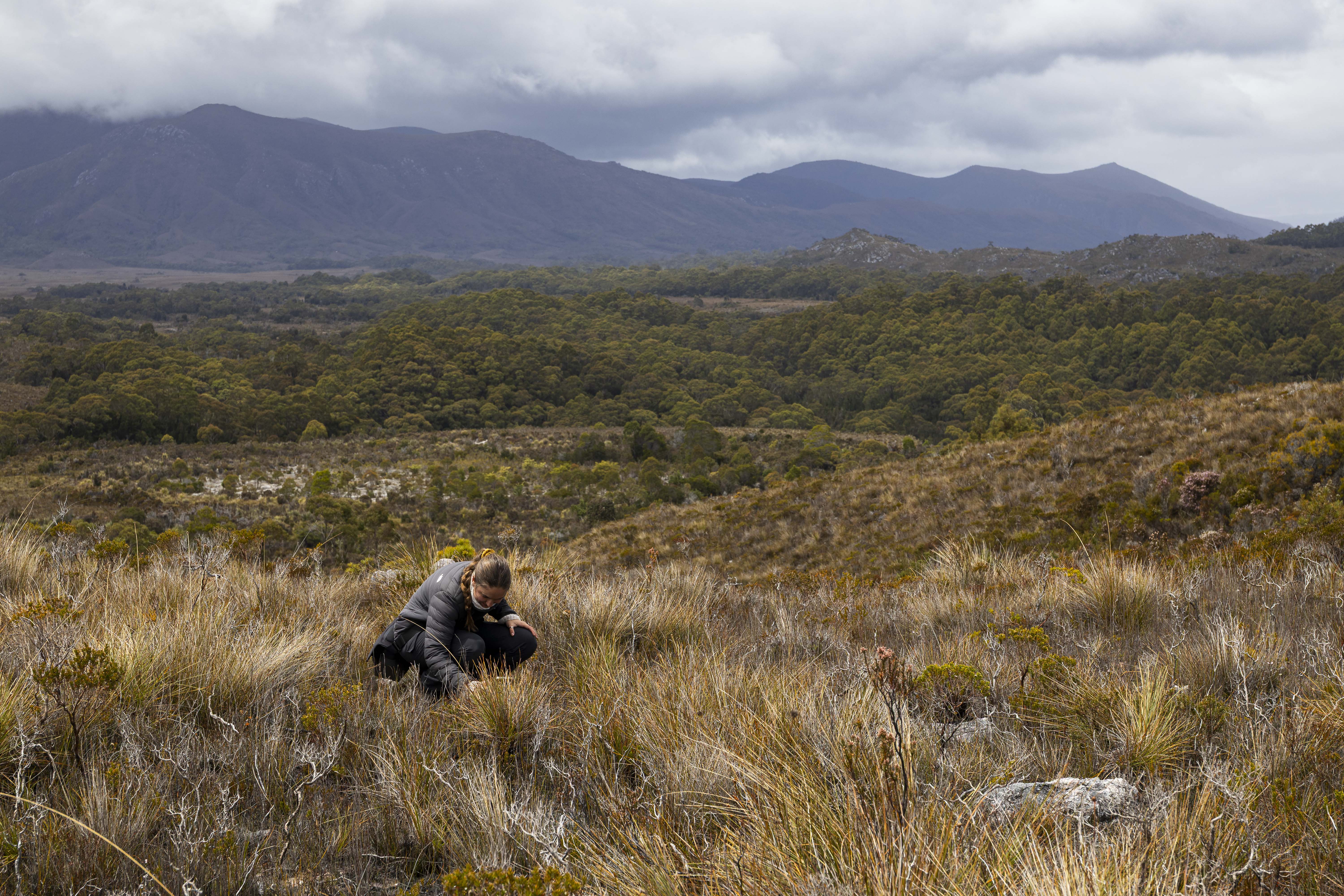
Pedder BioBlitz 2025, Michael Blowers
The Science Behind It
The evidence for restoration
The Evidence Room
Undeniable authority and urgency
The case for restoring Lake Pedder rests on decades of research. The question is no longer whether it can be done, but when it will be done.
The science is settled: the beach survives beneath a few millimetres of sediment and the lake and surrounding environs remains intact. The engineering is largely a matter of dismantling redundant dams. Two of the three, Edgar and Scotts Peak, sit on the Edgar fault line and are already classed as high risk, with tens to hundreds of millions committed to works on aged, high-risk infrastructure.
The energy argument has fallen away too. The Pedder Impoundment is a storage lake which gravity feeds into the Gordon Impoundment where the power station is located, contributing only 57MW annually. It contributes less than 5% of Lutruwita/Tasmania’s annual energy needs. For context, since coming online, the Cattle Hill and Granville Harbour wind farms have generated 154% of Pedder’s power. With the advancement of renewable energy technology, replacing the power the Impoundment generates could come from a small windfarm, suburban roof-top solar, community battery projects or a concentrated effort on energy efficiency in our homes.
Nor did the impoundment ever deliver the tourism boom it promised. When the original lake was flooded, thousands were forecast to flock to the new, larger and more accessible Impoundment. After the stabilisation of introduced trout fishing in the mid 1990s, it was clear that boom was never coming, and the visitor numbers tell the story plainly: an average of more than 50,000 people a year in the years before flooding (1968–1972), around 15,000 across the 1990s, and only about 19,000 in 2016, at the height of the global tourism boom. Both the Tasmanian Wilderness World Heritage Area Tourism Master Plan and the Derwent Valley Council have since called for a re-think of tourism on the Gordon River Road.
Post-COVID, in a climate-aware world of travel, restorative tourism points to the future — revive the region, restore Pedder. Pedder already sits within the TWWHA boundary, so it is protected from development and over-commercialisation, and the old Coronets walking track remains intact, limiting the footprint of any new access. The Southwest National Park and the TWWHA also qualify as a Dark Sky Sanctuary, the highest grade of dark sky protection. Declaring a sanctuary with Strathgordon as the node, leading into a restored Lake Pedder, would put this corner of Tasmania back on the global map.
Included within the Tasmanian Wilderness World Heritage Area on the understanding that the original lake would one day return, the restoration of Lake Pedder would put Lutruwita/Tasmania and Australia on the global map as leaders in ecosystem restoration — living proof that past environmental mistakes can be repaired.
Beneath the impoundment
The beach is still there
In February 2020 a crew took a submersible down to the original Lake Pedder beach. The pink quartzite lies beneath only a thin layer of fine sediment.
The Scoping Study
Findings of the 2020 Ecological Restoration Scoping Study
by Dr. Anita Wild of Wild Ecology
Dr. Wild was recruited by Lake Pedder Restoration Inc in July 2019 to undertake the scientific scoping study to determine the ecological and scientific feasibility of the full restoration of the original Lake Pedder from the current Huon-Serpentine Impoundment. This study is presented in a series of factsheets, information sheets and reviews designed for ease of reading. The series is being prepared at different stages — keep an eye on this page or follow @restorepedder on social media for notifications on new factsheet and review releases.
The study was made possible due to the generous contributions of our Restore Pedder community to the March 2019 crowdfunder. With your help we can further the engineering and economic studies.
Factsheets & Reviews
Read the study
Every factsheet and review from the 2020 Ecological Restoration Scoping Study is embedded here to read in full. Open a category, choose a title, and it opens in the reader.
Factsheet
Flora Species
Also linked from the study: the 2022 UTAS and NEBR paper on the human health and wellbeing benefits of ecological restoration.
Study results
The Science! Restoration study, results and discussion
Dr. Anita Wild presents the findings of the 2020 Ecological Restoration Scoping Study.